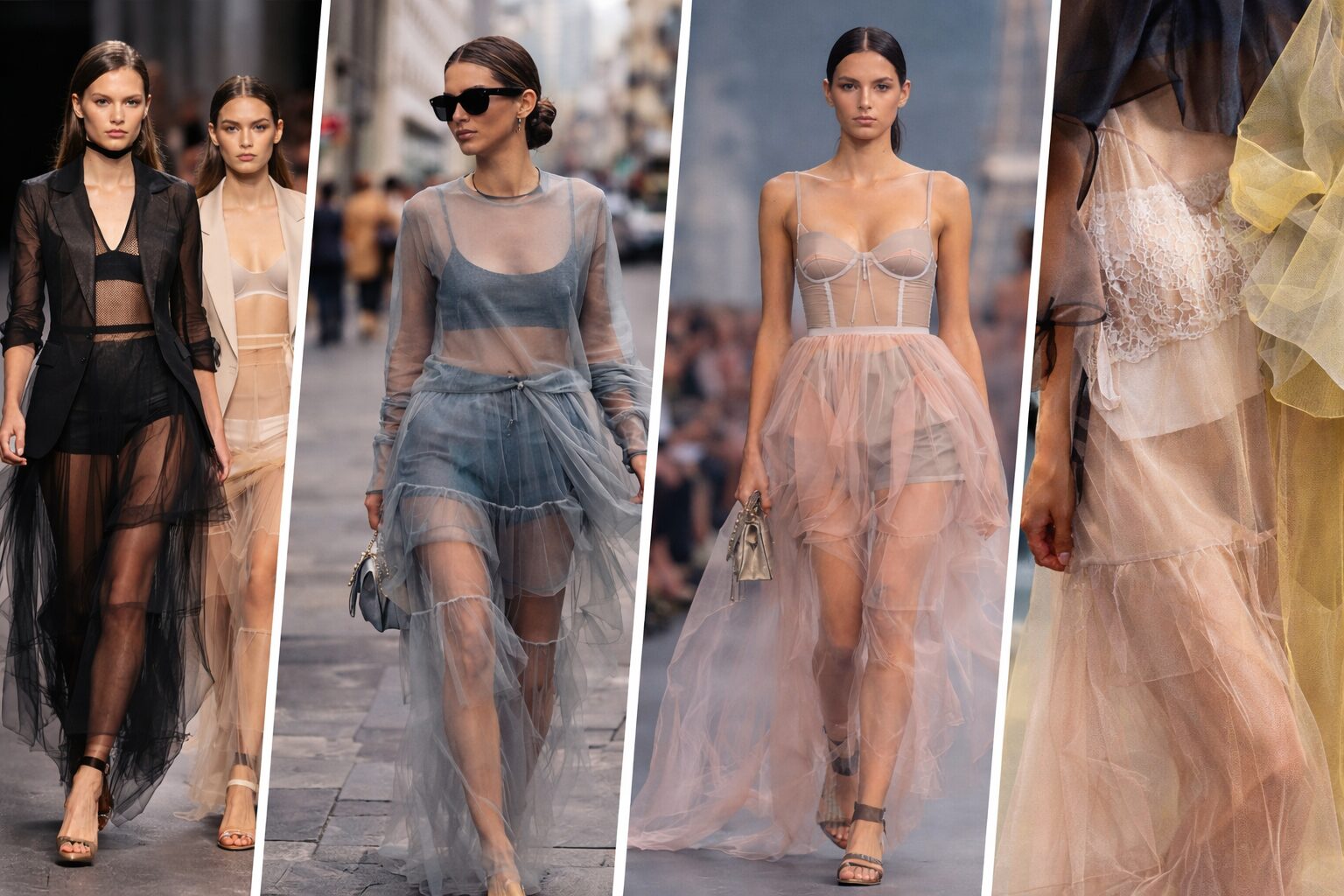
A Transparent Shift in Style
Sheer layering has emerged as one of the most talked-about fashion trends of early 2026, appearing across runways, red carpets, and street style in major cities. The look typically combines transparent or semi-transparent fabrics—such as organza, chiffon, or mesh—with more structured base garments, creating outfits that balance exposure with coverage.
Designers showcased layered sheer dresses over tailoring, translucent tops paired with knitwear, and skirts designed to reveal contrasting textures beneath. The trend has been visible in recent collections presented during Paris Fashion Week, as well as in influencer-driven looks circulating on social platforms.

Why Sheer Layering Is Gaining Attention
Fashion analysts point to several factors behind the rise of sheer layering:
- Versatility: Sheer pieces allow wearers to adapt outfits from day to night by adjusting layers.
- Visual depth: Transparency adds dimension without heavy embellishment.
- Individual expression: Layering enables customization, aligning with ongoing consumer interest in personal style over rigid trends.
From a commercial perspective, retailers note that sheer garments often encourage multiple purchases, as they are designed to be styled with existing wardrobe pieces.
People’s Opinions: Empowerment or Exclusivity?
Public reaction to the trend has been mixed.
Supporters say:
- Sheer layering offers a modern approach to body confidence without requiring full exposure.
- The trend challenges traditional ideas of modesty and formality in fashion.
Critics argue:
- Sheer looks can feel impractical for everyday wear or certain climates.
- Some consumers view the trend as less inclusive, noting fit and comfort concerns across body types.
These contrasting views reflect broader conversations about accessibility and realism in high-fashion trends.
Industry Perspective
Fashion buyers and stylists describe sheer layering less as a passing fad and more as an extension of long-running transparency trends, now refined with better tailoring and wearable silhouettes. Brands are increasingly offering toned-down versions—such as sheer sleeves or layered panels—aimed at a wider audience.
What Comes Next?
As the year progresses, observers will be watching whether sheer layering transitions from runway statement to everyday staple. Its longevity may depend on how designers adapt the look for workwear, casual settings, and diverse consumer needs.
Questions for Readers
- Do sheer and transparent layers feel wearable in everyday life, or better suited for special occasions?
- Should fashion trends prioritize visual impact or practicality?
- How can designers make statement trends more inclusive and accessible?